Conflicting edit · three-way merge
Oriental Heroes
Proposed against r1. r2, r3 approved since. 1 merged automatically; 4 need a choice.
Field Base · r1 Current · r3 Proposed Result
Status
Unknown
Complete
Ongoing
— conflict · choose one
Units
Not set
1280
Not set
Current · r3 auto · only current changed
Synopsis
Not set
EN · The predecessor of Dragon Tiger Gate was originally called Little Rascals, created by Hong Kong comics master Wong Yuk-long. Founded in 1970, he created the brothers Wang Xiaohu and Wang Xiaolong, while Shi Heilong was the protagonist of his other famous comic, Judo Devil Boy. The story begins with Wang Xiaohu, who arrives in Hong Kong from mainland China to search for his family. He befriends four young warriors, then battles a villain, ultimately defeating good, and this cycle continues. This cycle continues until the "Tsuen Wan Fifteen Wolves," where the story begins its long-running arc. The leader of the Tsuen Wan Fifteen, the Great Wolf King, is revealed to be a deadly demon who was a disciple of the Rakshasa Cult, Japan's leading yakuza. This leads to the Rakshasa Cult campaign, with the protagonists breaking out of Hong Kong and embarking on an expedition to Japan. This was a significant breakthrough at the time, and with the 99th issue, Little Rascals officially changed its name to Dragon Tiger Gate. The three emperors, Dragon and Tiger, are each handsome and imposing, captivating countless young women. But most of the beautiful women who admired them met tragic end. True to their beauty, beauty often leads to tragic fates. Today, let's discuss Wang Xiaolong's ill-fated love. Wang Xiaolong was a solitary and impulsive person, and his only true love in life was Yu'er. Yu'er, the daughter of a sword demon, cultivated the Jade Maiden Heart Sutra and Jade Maiden Finger. She fell in love with Wang Xiaolong at first sight and remained devoted to him until her death. Unfortunately, her beauty attracted the coveted Fire Cloud Evil God, who ultimately raped her and committed suicide. Her devotion to Wang Xiaolong is truly admirable! After Yu'er's death, Wang Xiaolong felt almost heartbroken. Coupled with his disfigurement, he suffered from extreme self-esteem and abandoned any desire for romance. Later, in Japan, he met Lingzhi, the daughter of Nangong Yizhi, one of the five great families of the alliance. The two fell in love, but due to complex circumstances, their feelings remained vague and elusive. Later, in an attempt to help Xiaohu regain his power, Lingzhi was forced into marriage by the evil monk Jinzhong, and was subsequently abducted and raped... Wang Xiaolong was very anxious when he learned that Lingzhi had been abducted. It was then that he realized that Lingzhi's position in his heart was no less than Yu'er's. Unfortunately, Lingzhi also followed Yu'er's footsteps...
EN · Oriental Heroes is a popular Hong Kong-based manhua created by Wong Yuk Long, a writer/artist responsible for also creating a number of other popular manhua titles. It was created in 1970, and it continues to be published today. The book was the first Hong Kong manhua title based on action and fighting, often borrowing from the wuxia literary world. It established a new action genre of Hong Kong manhua and spawned many imitators. The theme of its stories often revolve around brotherhood and the fight for justice. The 2006 movie Dragon Tiger Gate was based on this manhua. EN · Oriental Heroes is the book's official English name. Its Chinese name is pronounced in Cantonese, Lùhng Fú Mùhn (simplified Chinese: 龙虎门; traditional Chinese: 龍虎門; pinyin: Lóng Hǔ Mén). This name translates as "Dragon Tiger Gate" in English, and is in reference to the name of the fictional kungfu school and organization that is a major subject matter in the book. EN · Oriental Heroes was first published in 1970 under the title Little Rascals (traditional Chinese: 小流氓; Cantonese Yale: Síu Làuh Màhn). It featured stories about young people living in public housing estates in Hong Kong fighting gangsters and criminals. The heroes of the stories exhibited antisocial behaviours, but routinely fought for justice. In the early years of the book's run, the fighting was very graphically illustrated. Various weapons were used, where spilled blood, internal organs, guts, and bones were shown in the injuries that the characters sustained. People criticised the graphic violence depicted in Oriental Heroes and other similar action genre manhua, eventually leading to the enactment of the Indecent Publication Law in 1975, banning explicit violence in manhua. Description from MangaUpdates · https://www.mangaupdates.com/series/e2jjtc2
— conflict · choose one
Cover 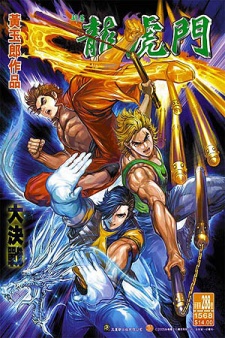
Not set
— conflict · choose one
External IDs
Wikidata · Q2580793
Wikidata · Q2580793 AniList · 47442
Wikidata · Q2580793 MangaUpdates · e2jjtc2
— conflict · choose one
Comments
No comments yet.